Free take home whitening when you book a new patient exam with X-Rays & Cleaning!

Are you dreaming of having a brighter and whiter smile?
We get it. Your teeth can become discolored over time due to not taking good care of them, smoking, and consuming a lot of colored food or drinks.
The good news is that you can achieve a whiter smile from the comfort of your home with many over-the-counter products designed to combat stained teeth.
One of the most common products you’ll find are the whitening kits, which are widely considered convenient and cost-effective. They can be used without the help of dental professionals.
However, you might be wondering, do teeth whitening kits really work?
If you've never used a teeth whitening kit before, don't worry. We're here to tell you all you need to know about them.
Teeth whitening kits are products designed to help people brighten their smiles by lightening the color of their teeth and eliminating stubborn stains.
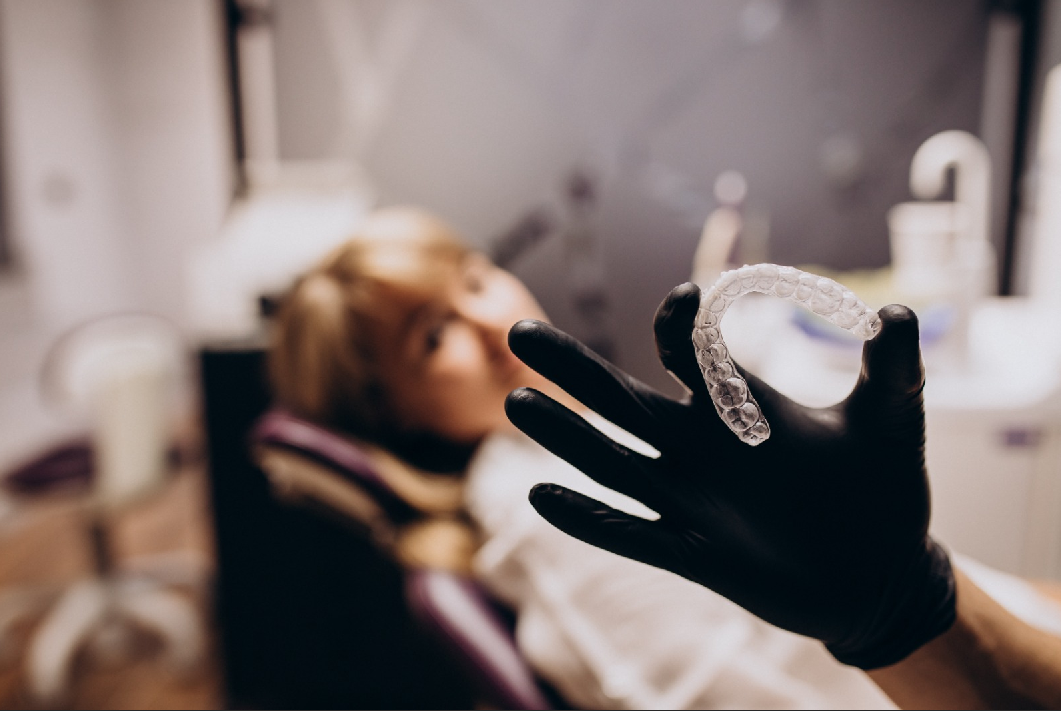
They resemble mouth guards in design and function.
Typically, these kits feature trays filled with a whitening gel that you apply to your teeth for a specified duration.
There are two main categories of teeth whitening kits: those intended for home use and those provided by dental clinics.
Home teeth whitening kits have a lower concentration of whitening agents compared to professional ones, making them safer for unsupervised use.
At-home whitening kits come in different types, such as trays that you can shape to fit your teeth, trays that come pre-filled with whitening gel, and more advanced options that have LED lights.
They often come with tubes of whitening gel or syringes, so you can apply the gel precisely and customize it to your needs.
Most at-home teeth whitening kits contain gels with carbamide peroxide or hydrogen peroxide. These gels help whiten teeth by removing stains and discoloration.
The kits have trays that help the whitening gels make consistent contact with your teeth, which helps with the bleaching process. There are two main types of trays: pre-filled and moldable.
Moldable trays can be heated to conform to the shape of your teeth, ensuring a snug fit. Once molded, you can easily remove and reinsert the trays, filling them with the whitening gel as needed.
Teeth whitening kits with LED lights have gained popularity for their modern appeal. These kits include trays filled with whitening gel and an LED light to activate the gel for whitening.
Different ingredients are found in whitening kits.
The leading whitening agent is usually hydrogen peroxide or, in non-peroxide products, a sodium compound such as sodium chlorite or sodium bicarbonate.
Some products also contain an activator that helps with the whitening process.
Hydrogen peroxide whitens teeth by breaking down the pigments in the enamel and dentin, lightening yellow stains. Different concentrations of hydrogen peroxide are available to achieve varying levels of whitening.
Higher concentrations of teeth-whitening products generally provide better results and a more noticeable effect.
However, these stronger concentrations are usually only available through dentists.
On the other hand, lower concentrations are not as effective but can still instantly whiten teeth. These lower concentrations can be easily found in teeth bleaching kits or whitening strips at your local store.
An alternative to using hydrogen peroxide for whitening is a solution based on carbamide peroxide. This type of solution is commonly found in at-home teeth whitening products.
When carbamide peroxide oxidizes, it produces hydrogen peroxide, which helps with the whitening process.
When picking a teeth whitening kit, it's important to tell the difference between professional treatments recommended by Kingsway Dental and over-the-counter options.
Professional treatments are performed at the dental clinic and often deliver stronger and faster results.
But there are still very good choices available at your local store.
Whitening strips, gels, and trays are popular for achieving a brighter smile.
Whitening strips and gels typically contain hydrogen peroxide, which effectively bleaches teeth.
The whitening strips have a thin layer of peroxide. They are applied to the outer surface of the teeth for 30 minutes twice a day for 14 weeks.
Gels, on the other hand, are brushed directly onto the teeth and left in place for 30 minutes before rinsing off.
Trays are usually filled with whitening gel, which you put over your teeth for a certain time. These trays work like mouth guards, making the gel more effective by keeping it in constant contact with your teeth.
Whitening trays may not be as well-known as strips and gels, but they are a much more effective way to whiten your teeth.
The strips have a similar formula to the gel used in trays but at a lower strength. This may result in less noticeable effects.
But one common drawback of over-the-counter whitening tray kits is that the trays often do not fit well, making them uncomfortable to wear.
Your dentist can make custom whitening trays that fit your teeth comfortably and require less gel for best results.
LED whitening is a process that uses a blue LED light along with a whitening gel. The gel is applied to the teeth, and the LED light is positioned to fully expose the gel to the light.
When the whitening gel is exposed to the blue light, it activates the oxidation process. This process breaks up the gel, allowing the chemical reaction to lift stains from your teeth.
LED teeth whitening used to be done at the dentist's office. Nowadays, you can use at-home whitening kits with blue LED lights. These kits are not only easier to get, but also cheaper.
LED whitening kits can make a noticeable difference in your smile when done properly.
Professional teeth whitening is done in a dental office, such as Dental Arts Clinic.
In-office whiteners are stronger than at-home alternatives because they contain more peroxide. This means they can change the color of your teeth more quickly than at-home methods.
The in-office whitening procedure takes about an hour.
To protect the mouth from the peroxide, the dentist will cover the gum tissues with a thin sheet of rubber or a protective gel. Sometimes, a light or laser is used together with the peroxide.
You can buy at-home whitening kits from your dentist or at the store. These kits include whitening strips, trays, lights, rinses, and brushes.
Deciding between at-home and professional teeth whitening can be challenging, but it all depends on your budget and desired results.
The main difference is how long the whitening lasts.
Professional teeth whitening can reach deep into the tooth, which helps your teeth stay white for a longer time compared to at-home methods.
Teeth whitening products or kits can be found at your local drugstore or supermarket for $5 to $60. This makes them a more affordable option compared to professional treatments.
But over-the-counter teeth whitening products may not be as effective as professional teeth bleaching treatment and may not deliver the same results.
For guaranteed results with high-quality teeth whitening, investing in professional whitening services is best.
The cost of these treatments will depend on the type of treatment your dentist recommends and whether you need any additional procedures beforehand.
Even if at-home teeth whitening kits are usually cheaper than getting your teeth whitened at the dentist, professional teeth whitening is much faster and more effective than using multiple at-home kits.
With at-home kits, results can be inconsistent depending on your teeth and oral health.
Teeth whitening is usually safe when done by a dentist or other regulated dental professional. However, using home kits or getting teeth whitening done at beauty salons by untrained staff carries risks.
It's important to note that misuse of at-home kits can lead to oral health damage. This can occur if a person uses the kits more frequently than recommended or leaves them in their mouth for longer than instructed.
For safe teeth whitening, it's important to seek guidance from a dentist. They can consider your oral health, discuss your goals, and recommend the best whitening method for you.
Teeth whitening can give you a bright smile, but it's better to know about possible side effects:
Teeth whitening doesn't last forever.
It can last from a few months to up to 3 years, depending on the person and the type of treatment or product.
If you smoke or drink red wine, tea, or coffee, the whitening effect won't last as long because these can stain your teeth.
To maintain the desired level of whiteness, you may need to have regular touch-ups or maintenance treatments.
Whitening kits are a convenient option with good results if you follow the instructions.
However, we highly recommend visiting your dentist before using any products at home to understand your expectations and identify the ideal option for you.
Dentists at Dental Arts Clinic aim to protect your smile from side effects and product misuse. If you need guidance, book your appointment here.
.jpg.jpg)